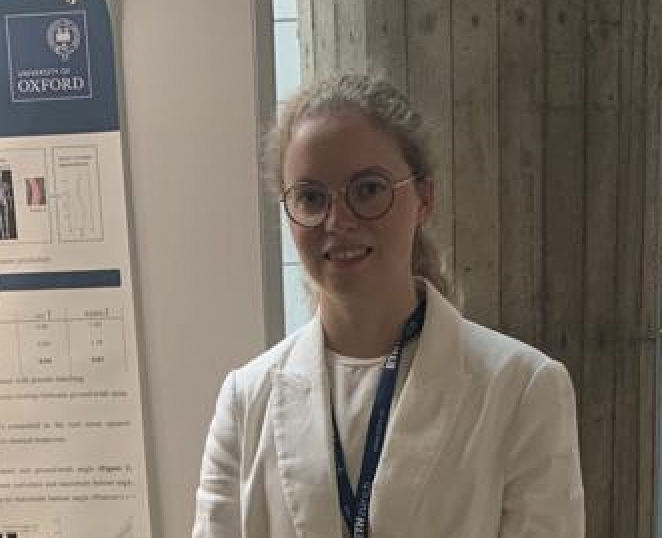
About
I am a Principal AI Scientist at Huawei R&D building multimodal AI and agent systems, withs prior large-scale medical/multimodal benchmark experience. My work spans MLLM, VLM, generative AI, post-training (SFT, DPO, RLHF-style preference optimisation), and geometry-aware learning.
I hold a PhD from the University of Oxford (Visual Geometry Group), where I published at top venues and built production-quality codebases for multimodal learning and generative models.
Experience
Principal AI Scientist — Multimodal AI
- Working on developping multimodal foundational modelss
AI Research Engineer — Agent Evaluation, Safety and Multimodal Reliability
- Building open-source evaluation and safety infrastructure for tool-using multimodal and voice agents, including trace-level VLM reasoning evaluation, voice-agent critical-entity robustness, and policy-gated action validation
AI Engineer — Multimodal ML
- Building multimodal ML pipelines for production decision-support systems
- Designing evaluation and regression-testing infrastructure for model releases
PhD Researcher
- Built distributed training workflows for diffusion and vision-transformer models on multi-GPU clusters
- Processed and curated datasets at scale (1B+ labelled masks, 48K+ source datasets)
- Published 6 papers at ICCV, MICCAI, CVPR, and BMVC.
ML Engineer Intern
- Built multimodal learning pipelines for medical imaging data
- Worked across data engineering, model training, and evaluation
AI Software Engineer
- Developed ML-powered features for clinical imaging products
- Integrated models into production software with CI/CD and testing
AI Engineer Intern
- Prototyped deep learning pipelines for healthcare applications
Open-Source & Tooling
mmeval-vrag
Pip-installable Python package for evaluating multimodal RAG systems. Measures retrieval quality, hallucination rate, answer faithfulness, and cross-modal alignment. Supports checkpoint comparison and automated regression testing for CI integration.
pip install mmeval-vrag

WMW — World Models in Words
Framework for auditing the physical state-transition commitments of vision-language models. Instead of scoring only the answer, it elicits a typed reasoning trace, verifies it with a hybrid checker, and surfaces hidden inconsistency. Includes WMW-TRACEBANK: 200 validated traces across 17 physics families plus 3,200 preference pairs.
Technical Skills
Projects
UKBOB: Billion-Scale 3D Segmentation Pipeline
End-to-end pipeline generating 1B+ labelled masks across 48K+ datasets for generalizable 3D segmentation. Semi-supervised learning with automated quality control.
FrEVL: Parameter-Efficient VLM Adaptation
Vision-language adaptation using frozen CLIP/BLIP embeddings. Strong multimodal performance with significantly fewer trainable parameters. Designed for fast iteration and low compute cost.
Agentic RAG System
Retrieval-augmented generation system with grounding diagnostics, retrieval quality metrics, and evaluation of multimodal outputs. Built for decision-support use cases.
X-Diffusion: 3D Volume Generation
Cross-sectional diffusion model generating complete 3D volumes from sparse inputs. Production-oriented codebase with reproducible training and inference pipelines.
MVDiff: Multi-View Diffusion for 3D Reconstruction
Scalable multi-view generation pipeline for 3D object reconstruction from single images with flexible viewpoint conditioning.